
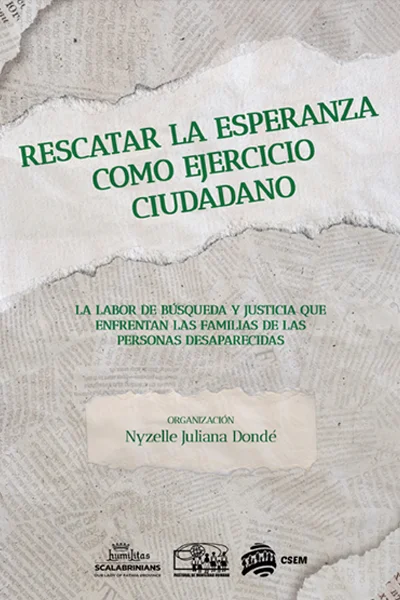
The powerful narrative about the stories of migrants and their families during the migratory processes in the Central America-Mexico-United States region, in five chapters, reveals from different perspectives, the anguishing journeys of families living with the disappearance of loved ones while facing the Mexican route.
Beyond the terrible circumstances, these families have managed to overcome pain and uncertainty, becoming agents of change. They found a new meaning to the duality between pain and hope, demanding justice, truth and the cessation of disappearances on the migratory routes that persist today.
The narrative also highlights the valiant work of pastoral workers, human rights defenders and migrants who, as witnesses and victims, denounce the atrocities that took place during the seizure and disappearance of migrants.
The movement of these defenders led to denunciations before the Mexican government, despite the initial denial of the events, which resulted in the criminalization of migrants and their rights. With the resistance of these groups, the work in the network grew stronger and the issue gained more and more international repercussions.
The book also shows how the negligence of the Mexican government was a huge mistake that led to the toleration of crime, impunity and cruelty. This set a precedent that continues to affect the country today. Although at that time there were a small number of people and organizations committed to defending the rights of migrants, the government persisted in denying and minimizing the crimes committed.
The same situation occurred in Honduras, as Rosa Nelly's testimony documents. The relatives of disappeared migrants have had to fight tirelessly to be heard, forming collectives and developing their own search and documentation strategies. Even in the face of difficulties, these families have crossed geographical borders, seeking justice and national, regional and international visibility.
Despite collective progress, the families have not yet achieved truth, justice and the guarantee that such atrocities will not be repeated. It is essential to emphasize that, although they have transformed their pain into struggle, this does not mean that they have forgotten it. The book highlights the importance of mental health support and strategies for deconstructing the stigmas surrounding the disappearances of migrants.
The absence of missing persons deeply affects families, especially children and teenagers. The hope of finding them alive is a constant that prevents many families from finding the closure they need to heal their wounds.
Through their collective actions, the Committees of Relatives of Disappeared Migrants have challenged government policies and promoted the creation of transnational mechanisms for seeking justice. Their demands include the accountability of states in relation to the disappearances and massacres documented in the 21st century. However, despite their tireless efforts, they have not yet received the justice they seek.
The book also highlights the importance of strengthening the demand for a Truth Commission and a Special Commission for the Investigation of Masacres and Disappearances of Migrant Persons. These commissions are essential for achieving the justice and answers that families so desperately want, and for these crimes against humanity to finally cease.