
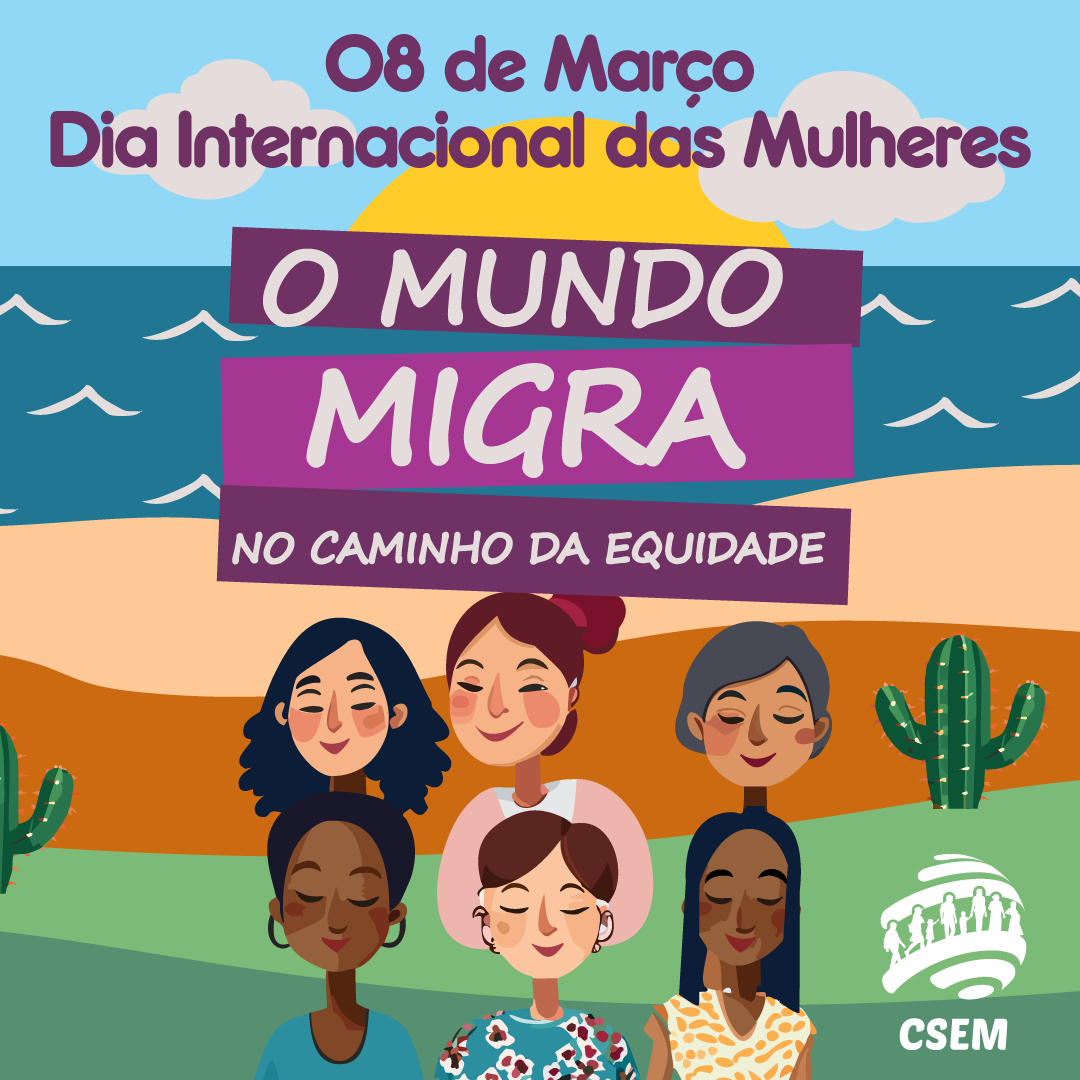
On International Women's Day, events such as the Migrant Women Entrepreneurs' Fair (information below) rescue the meaning of not just being a historical date, but also a continuous meeting point for reflections on women's demands. A space to raise the flags of achievements and a point of reference towards the horizon. A milestone in history that marks this space transformed into a battleground for equal rights and the eradication of all forms of violence against women.
In 1910, during the Second International Socialist Women's Conference in Copenhagen, Denmark, a resolution passed by representatives from 17 countries set March 8 as the date for the Commemoration of Women's Rights.
The Industrial Revolution was a time of oppression within the imposed system and generated demands from labor groups that were pushing for visibility and solutions to problems such as wages and improvements in working conditions and spaces. Among these emerging groups were women, for whom the conditions of precariousness and exploitation were even greater. In March 1857, women workers in a textile factory in New York organized a strike that had an impact on history and marked a turning point that has guided the way forward ever since, like a compass.
The vindication journey has been long and arduous. It has been full of invaluable achievements that have been contributed to by the joint efforts of many women in different places. However, the initial demands of this trade union movement, such as better wages, shorter working hours and the right to vote, are still valid.
Despite a hundred years having passed, there is still a gender pay gap, violence at work, disproportionate work in relation to pay and difficulties in entrepreneurship. There are still challenges to face in a society that is renewing its dynamics of coexistence, reissuing and opening up new forms of social exclusion. From this perspective, International Women's Day is a commitment to society, as it opens the focus to other spaces that require visibility.
Today, feminist demands have evolved, adapting to new global realities. Working women are now also migrants, moving around autonomously and in almost equal proportions in terms of gender. The feminization of migration creates new spaces for action and commitment to bring the promotion and guarantee of rights even to geographically and culturally remote areas, tackling diversity with a single voice.
In this context, International Women's Day becomes a commitment to society, opening up the focus to other spaces that require visibility and action.
Empowering migrant women in Roraima
On March 7 and 8, the Entrepreneurial Women's Fair was organized by Cáritas Diocesana de Roraima in partnership with Fé e Alegria. The aim, according to Orilene Marques, Executive Secretary of Cáritas RR, is "to value and encourage migrant women to gain their financial independence through these initiatives, recognizing and promoting their work, as well as one of the ways to combat social and economic inequality."
According to her, Caritas RR focuses its activities on the popular solidarity economy, promoting training and participating in fairs. In this context, it is crucial to carry out such activities in order to highlight the work of migrant women who choose this alternative as a means of providing for their families. This event not only increases the visibility of their services, but also promotes the exchange of knowledge between them, further strengthening their mutual support network.